Tips to get close without disturbing the shot
Learning how to approach wildlife for photography is one of the most important skills for any nature photographer. Getting close to animals without disturbing them leads to better photos—and better experiences. This post offers practical wildlife photography tips you can use in forests, grasslands, or even your own backyard.

One of the most memorable moments in the field is when a wild animal sees you—and stays. Not frozen in fear, not startled into flight, just watching or continuing it’s own business. It is a small gesture of trust, and it changes how you move from then on.
I’ve spent years learning how to master that kind of moment. Sometimes it’s a bird letting you make a few more exposures. Sometimes it’s a deer easing back to grazing after you’ve composed the first frame. The best wildlife photography happens in that space—still, aware, and unforced.
Learn the behavior of the animal you want to photograph
Each species has its own rhythm. Some are bold, others quick to scatter. Learning a few basics about behavior helps you be prepared—and miss fewer shots.
- Territorial or timid? Some animals will hold their ground; others vanish at the snap of a twig.
- Daily patterns: Most are more active early and late in the day. The light is better then, too.
- Protected areas: Always check the posted distance guidelines in parks or refuges. Follow them. They’re there for a reason.
How to get close to wildlife without startling it
Most animals are better at watching than we are. They notice the way light reflects of your clothing, the pattern of your movement, or the pressure of your footsteps.

- Use what’s already there: Trees, tall grass, rocks, and shadows all help break up your outline.
- Look without staring: A fixed gaze reads as a threat in the wild. While stationary, look though the view finder and keep your face behind the camera to reduce visibility of your facial features.
- Move with intention: Take your steps when the animal is looking away or feeding. Freeze while the animal is looking directly at you. Many animals rely on movement to detect danger.
- Avoid bright light: Standing in full sun makes you easier to detect. If you can, stay shaded.
If you’re noticed, stop. Let them settle. Sometimes doing nothing is what earns you a little more time.
Adjust your approach based on species
Each group of animals has its own habits. And each requires a slightly different way of moving through their world. It is important to keep a safe distance. Even a small doe deer can turn aggressive if it feels threatened. Especially if it has a fawn nearby.
- Birds: Most birds don’t tolerate motion. I wear muted colors, stay low, and move only when their attention drifts. A blind helps if you plan to stay a while.
- Reptiles and amphibians: These animals often rely on staying still to stay safe. In the cool of early morning, they move slowly—and so should you. I keep low and avoid sudden gestures. I stay well back from anything venomous or aggressive.
- Insects: Butterflies and dragonflies are easiest to photograph while they’re basking or feeding. I avoid casting shadows and step softly. A macro lens with a little working distance goes a long way.
Recommended gear for photographing wildlife

Getting closer isn’t always about moving in. The right gear helps you keep more distance. Animals prefer this.
- Telephoto lens: Essential for filling the frame with sharp detail from a distance.
- Tripod or monopod: Helps you hold the shot steady—especially at a lower shutter speed.
- Blinds and camouflage: Worth the effort when working with high-alert species. I’ll write more soon about using cover and concealment in the field.
Field story: the grass-chewing trick
Years ago, while on assignment to photograph bighorn sheep in New Mexico, my presence was detected before I could gain better cover. A ewe had me pegged and was about to alert the rest of the herd.
I paused, bent slightly at the waist, and grabbed a small handful of grass. I started chewing it—slow and rhythmic, like the sheep do with a few blades sticking out each side of my mouth. I figured if I couldn’t disappear, I’d try to blend in. Bending slightly changed my human profile and my behavior made me appear less predatory and more like just another herbivore.
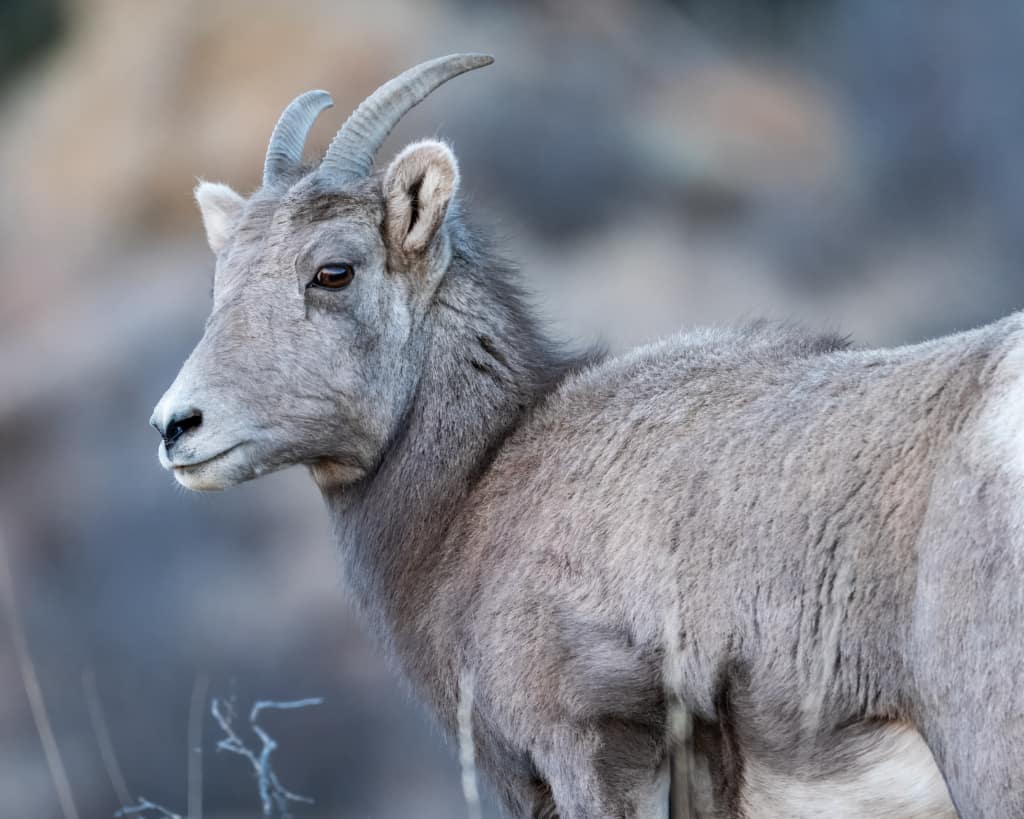
It worked. She stayed. So did the rest of the herd. I’ve used that same trick with oryx and pronghorn, and once showed it to a field partner who laughed until it worked for him, too.
Sometimes what matters most is not acting like a human at all.
Final thoughts on ethical wildlife photography
Good wildlife photography is built on restraint. The shot isn’t worth undue stress to the animal, or damage to the habitat. When you get it right, you leave no trace—except the story you carry home and the photo you were blessed enough to capture.
Sign up for the best photography tips!
Join our mailing list for featured posts